9 min read

Published
May 28, 2026
AI Agentic Development: What it is and Why it Matters for Product Teams

Ivan
Frontend Development Lead
If you've been anywhere near the internet in the last year, you've probably seen people claiming that AI is going to replace developers any day now. You've also probably seen the other camp, the "AI is just fancy autocomplete" people, rolling their eyes at every demo. Both groups are missing what's actually happening, and the thing they're missing has a name: AI agentic development.
I want to clear up what agentic development actually means, because it gets thrown around a lot. It's not the same thing as opening ChatGPT and pasting in a function. It's also not "vibe coding," even though those two often get lumped together. And if you're a company commissioning a digital product right now, the difference between agentic AI development and vibe coding matters more than you might think. It affects what you get, how fast you get it, and how reliable it is once it ships.
So let me walk you through it.
The simplest way I can put it is: an AI agent is a model that can take an instruction, plan how to carry it out, use tools to get it done, check its own work, and return a result. That's the difference. It's not a chatbot you talk to. It's something that does the work.
When you ask ChatGPT to "write me a function that sorts a list of users by signup date," it gives you back a chunk of code. You then copy it, paste it into your editor, run it, fix the imports, fix the typo, fix the part where it hallucinated a function that doesn't exist, and eventually get something working. You're the one doing the loop. The AI is just a really fast suggestion machine.
An agent does that loop itself. It reads your codebase, figures out where the function should live, writes it, runs the tests, sees where they fail, debugs, tries again, and only comes back to you when it has something that works, or when it genuinely needs your input. It’s less like asking someone for directions, and more like handing them the keys.
That's a big shift, and it's why people are excited (or terrified, depending on who you ask).
.gif)
"Vibe coding" is a phrase that became popular this year, and I think it's important to distinguish it from agentic development, since they sound similar but aren't the same thing.
Vibe coding is when a developer (usually a hobbyist, sometimes a professional, often somewhere in between) just types prompts into an AI and ships whatever comes out. No tests, no code review, no real understanding of what was generated. The "vibe" is that it works on their machine, the buttons click, and the demo looks good. That's the bar.
It's fun, fast, and honestly, for a personal project or a weekend prototype, there's nothing wrong with it. I do it myself sometimes. But it is absolutely not how you build a product that real people are going to use, that needs to integrate with real systems, be maintained for years, or pass a security review.
The problem with vibe coding is that AI models are confident. They will write code that looks right, sounds right, even compiles right, but they are silently doing the wrong thing, and studies are starting to back this up. Veracode's 2025 analysis found that 45% of AI-generated code samples contained at least one vulnerability, while GitClear's longitudinal study of 211 million lines of code found that short-term code churn (code that gets reverted or rewritten within two weeks) has grown 84% since 2020, tracking closely with the rise of AI assistants.
Vibe coding is what happens when you trust the output without verifying it. Agentic development is the opposite of that. The whole point is that there's a structured loop with checks and balances at every step.
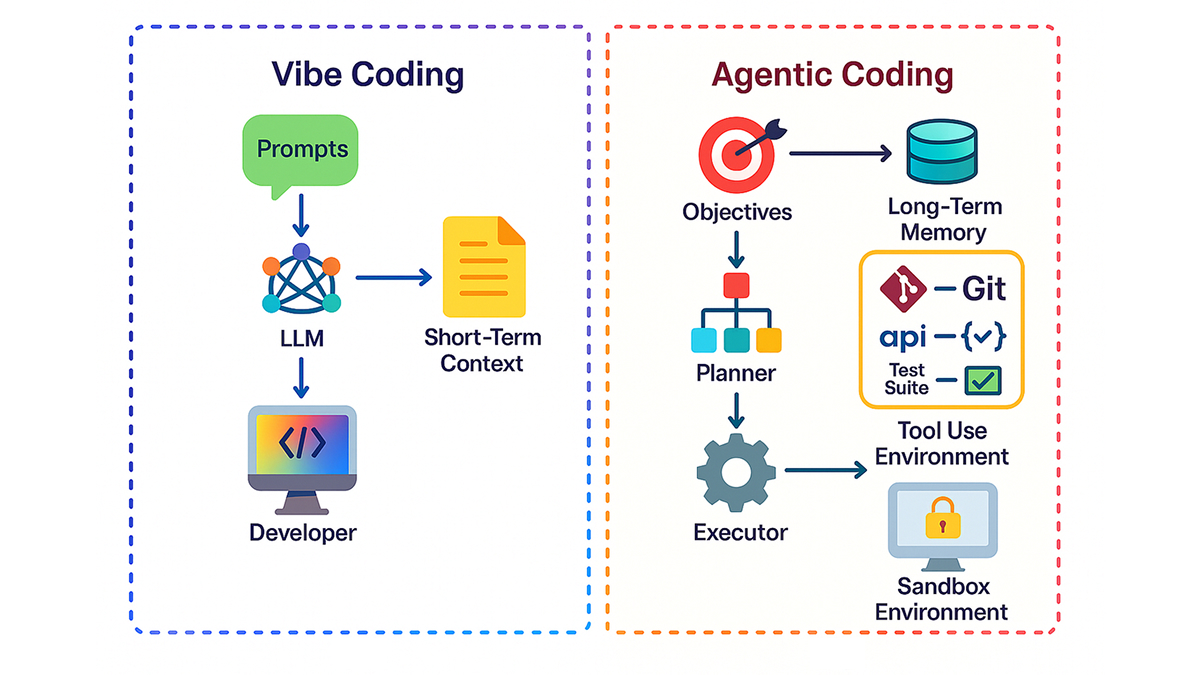
Let me describe what this looks like in practice, because the abstract version doesn't quite land. Say we're building a feature. Let's call it a notification system for a client app. In a traditional workflow, a developer would scope it out, design the data model, write the backend, write the frontend, write tests, and review it. That's the loop, and it happens in someone's head over a few days.
In an agentic workflow, the developer is still leading, but the agent handles much of the mechanical work. Roughly, it goes like this:
First, you write a spec. Not a Jira ticket, an actual spec, something like a spec.md file that describes what we're building, what the constraints are, what the data looks like, and what "done" means. Sometimes you brainstorm this with the AI, asking it to poke holes in your plan and ask clarifying questions until the requirements are airtight. This part sounds boring, but it's the most important part of the whole thing. Skip it, and you'll get garbage out.
Then you break the work into small, contained chunks. Not "build the whole notification system," but "add the database table," "add the API endpoint," "add the UI component," each as its own task. You feed those to the agent one at a time. The agent goes off, writes the code, runs the tests, fixes what's broken, and reports back. You review what it did. If it's good, you move on. If it's not, you correct it and update the project's instruction file so the same mistake doesn't happen twice.
And throughout the process, the developer is doing what developers have always done: making judgment calls, catching subtle bugs, deciding when something is good enough versus when it needs another pass. The agent is handling the typing, test running, and boilerplate. That ratio matters. The human is still accountable for the final code. That part doesn't change.
This is what people mean when they say "AI-assisted engineering." The keyword is engineering. There's still rigour and discipline, but the AI agent handles a much bigger share of the mechanical work than it used to.
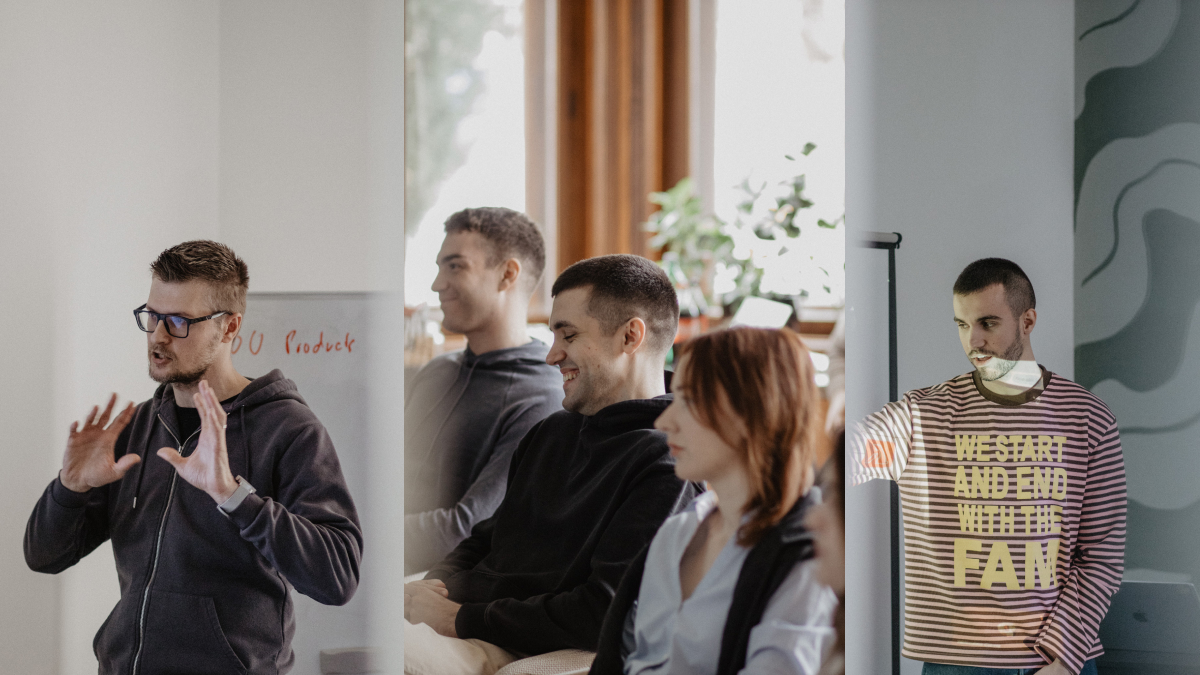
Back in February, we ran an internal workshop on agentic development and AI-assisted coding. The whole point was to lay the groundwork for how COBE adopts this stuff. Not in a hype-driven way, but with a clear methodology that we can apply across client projects.
A few principles came out of that workshop that I think are worth sharing, because they're the foundation of how we work now:
These aren't revolutionary ideas. They're just the same engineering principles that have always made software reliable, applied to a new tool. That's the part that gets lost in the hype.
If you're a company hiring an agency or a development team to build software for you, here's why this is worth your attention.
A team using agentic development properly can move significantly faster on certain kinds of work, such as feature implementation, refactoring, test coverage, and internal tooling. Estimates of speedup vary wildly depending on the study and the task, but even the most conservative numbers suggest meaningful gains for routine work. That can mean shorter timelines, faster iteration on prototypes, and more time spent on the parts of the product that actually need human creativity (architecture, UX, product decisions).
But – and this is the important part – a team that's vibe coding and calling it agentic development can deliver something that looks great in the demo and falls apart three months in. The output rate goes up, the shipped quality goes down, and you won't necessarily see the difference in a sales pitch.
So if you’re that company, the questions worth asking your development partner are pretty simple:
If the answers are vague, or if they sound like "we just use it however," you should be cautious. If they sound like a process – with specs, scoping, verification, code review – that's a team that's taking agentic development seriously.
I think this is the most interesting moment in software development I've experienced in my career. Not because AI is going to replace developers (I really don't think that's what's happening), but because the shape of the job is changing, shifting away from typing and toward judgment: what to build, how to direct the work, and knowing when something is actually good.
There's more to say than fits in one article, but for now, if you’ve questions about any of this, drop us a line.
Ivan is a Front-end developer at COBE. When he's not working or playing Soulsborne games, he's making video tutorials for YouTube.