9 min read

Published
April 13, 2026
Brand-Driven UX Design: Why Your Digital Product Feels Like Everything Else

Felix
Co-Founder & Managing Director
Recently, I was a guest on the Digitale Vorreiter:innen podcast, and we had a great discussion that touched on COBE's UXi (User Experience Identity) method and how digital products can stand out in the era of AI.
You can find the podcast episode here, but if you're not familiar with it, UXi is a science-based method for planning, structuring, and communicating a brand-driven design process for digital products. And to explain why UXi makes such a difference, let's start with a simple question: if I opened your app right now, could I tell it's yours without seeing the logo? Unfortunately, for most companies, the answer is no.
So what is the reason? Digital interfaces have never looked better, design systems are mature, component libraries are battle-tested, and tools like Lovable can create polished apps from just a few prompts… and yet at the same time, it’s getting harder to tell things apart.
If you think about it, we've seen this before already. Around 2015, Dribbble became the place for designers to showcase work. Within two years, half the apps on the market looked the same. Everyone really loved rounded cards and gradient buttons, but when everyone is special and "not like others", who's actually standing out?
Today, AI design tools pull from the same training data and patterns. They're great at producing something clean and professional, but they're terrible at producing something that feels like your brand. In essence, we can call this Lovable Design: competent, but generic and forgettable. If you look just like your competitors, you’re not doing enough to differentiate your digital product experience.
Let’s take a deeper look at this problem and an approach that can help you stand out.
For the last 20 years, UX has focused heavily on usability and helping users find or achieve what they need without getting lost, confused, or frustrated. Good usability is a given these days, but on its own, it doesn't give you much of a competitive edge. Nobody finishes a well-designed flow and thinks, "Wow, what a perfect flow!" (Except maybe a UX designer. It's a professional defect, okay?) They just expect it, and when it works, it's basically invisible.
The same is true for visual quality. With AI generating slick layouts in seconds, polish is a commodity, so beautiful interfaces no longer grab attention as they used to. So, where does UX differentiation live now?
UX researchers Marc Hassenzahl and Sarah Diefenbach describe two dimensions of user experience: pragmatic quality, meaning can I get stuff done?, and hedonistic quality, as in does this feel right?
Most teams handle pragmatic quality well. They test, iterate, measure, and work to make sure the app does what it's meant to do. But the hedonistic side often falls to the wayside, becoming something designers just sprinkle on at the end.
While it may seem logical to focus on the app's functional side and not place as much emphasis on the hedonistic side, it can be a costly mistake because hedonistic quality is what makes users feel something during the interaction. It's what keeps them from switching to the next app that does the same thing. And that feeling is exactly where your brand either reinforces its promise or unintentionally undermines it.
Pragmatic quality gives users a reason to use your app, but hedonistic quality is what matters when building brand trust through UX. In this way, you can think of a brand as a person you enjoy spending time with, and if it matches what the user expects emotionally, it will feel like time well spent. For example, if I want my bank provider to feel safe, and I get that feeling from them, I will want to keep using their services. Simple, right
Think about how much money goes into brand building. Positioning workshops, identity systems, campaigns, all of it to plant a specific promise in people's heads. BMW represents dynamism and driving pleasure, Volvo is about safety and family, while IKEA is friendly, warm, and welcoming.
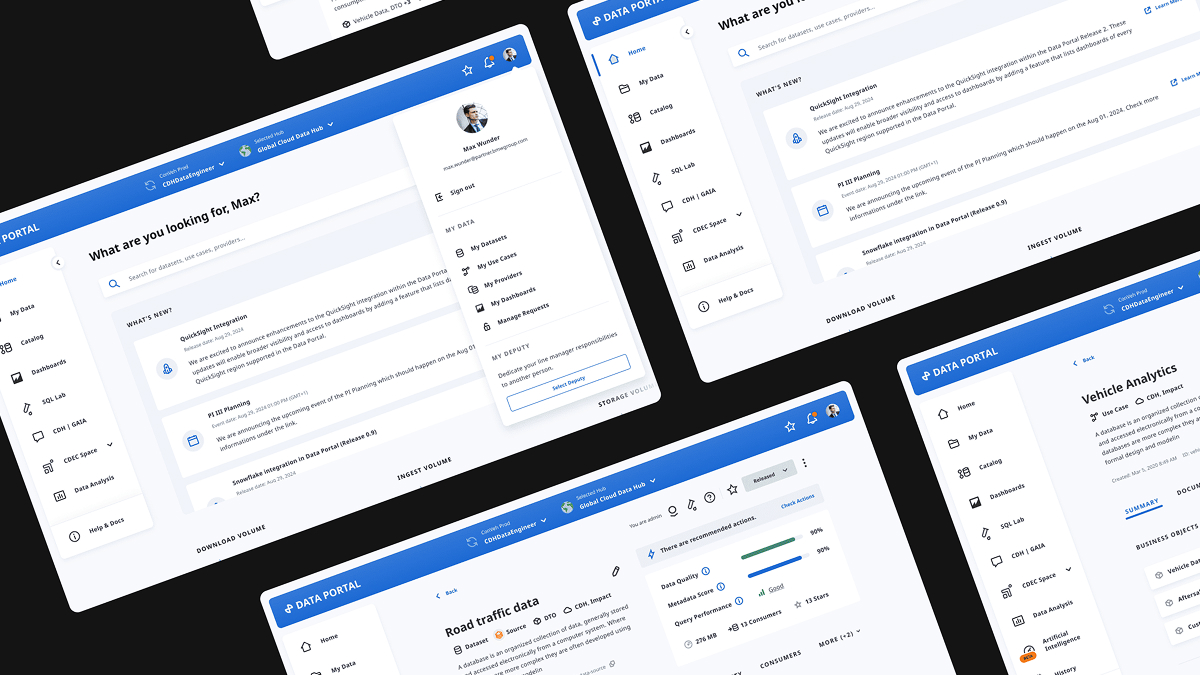
Now think about what happens when those companies hand their digital product off to a team that treats the interface as a purely functional job. The app works, the flow is clean, but it doesn't feel like anything specific. It could belong to anyone. A BMW app should feel dynamic, not relaxing. A Volvo app should feel secure, not exciting. And imagine using the IKEA app and it's full of exuberant, lavish animations? Doesn't quite fit, does it?
Let's look at what happened to Sonos. They positioned themselves as a premium brand that offers seamless audio. Seamless may be a buzzword, but it’s key here, because at first, the app just worked. But then they shipped an app update before it was ready, which broke core features, causing speakers to disconnect. And just like that, the app that held the whole experience together became the weakest link.
App Store ratings went from 4.5 to 1.8, the stock dropped 40%, and it was not because of a hardware failure, it was because the experience broke. In Sonos’ case, a broken app was a broken promise, something that went entirely against what they stood for. When experience works, nobody notices. When it fails – especially for a premium brand – the damage is wildly disproportionate.
That's the brand-experience gap. A disconnect between the values your brand promises and what users actually feel when they use your product.
How do you close the gap? The approach we've found works best is to root every design decision in the brand values. That’s what we do with UXi.
As a method, UXi draws from neuromarketing and behavioural economics. The core idea is, before the age of seven, humans develop strong associations between visual properties and abstract concepts. Empathy maps to warmth, softness, and organic shapes, dynamism connects to forward motion and saturated colours, trust links to cool tones, precision, and clean structure, and so on. These aren't opinions but patterns backed by research, which means you can use them deliberately.
Translating that to the digital world, if empathy is your core brand value, then your design system should show it. That means making use of rounded corners, warm colours, and generous spacing that feels welcoming. If your brand is about dynamism, your typography might lean italic, as if to suggest speed and vigor.
Every design decision traces back to a brand attribute, and this means there’s a side benefit that's almost as valuable: design reviews stop being taste contests. The conversation shifts from "I prefer this blue" to "does this express what we stand for?" So, no more wasting time on opinions, as UXi grounds your design decisions in solid research.
If you want your product to stand out among your competition, some key takeaways you should take with you are:
If your product works well but doesn't feel distinctly yours, it's not a cosmetic issue, it's a strategic one. With AI pushing visual design toward sameness, as well as eroding the classic storefront, the brands that win from here are the ones whose digital experiences will feel unmistakably them.
That means baking brand values into the design foundation, not just slapping them on top of your product at the end. You have to make them a structural input that shapes every component, every interaction, every moment. It's what turns a product people use into a product people choose.
If you’d like to learn what UXi can do for you, feel free to reach out. We’re happy to help.
Felix is the CEO and one of the co-founders of COBE always looking for ways to make the world a little more beautiful.